Listen to this podcast about an innovative method of teaching related to Literary Circles. In this case, the literary circle is focused on the book “Born to Run”, and a collaborative project between four students from Nelson, British Columbia. Listen now.
Lucerne: A Culture of Writing
This space needs an explination of the project and it’s intergartion of writing into the curriculm, and perhaps a bit about the people involved as a brief introduction to the video.
Rural Landscapes: 2010 Survey for Educational Leaders
Prepared by Terri MacDonald & Linda Farr Darling
Approximately 86,000 or 15% of students in British Columbia attend rural schools (Clarke, Imrich, Surgenor, Wells, 2003). While each rural school is unique, many of these schools are challenged by declining enrolment as their predominately resource-dependent local economies struggle to create a viable new role new place in the global economy. Educators are also under increasing pressure to deliver a quality education experience within the context of fiscal restraint. In 2003, the BC Minister of Education commissioned a Task Force to explore rural education in BC with respect to challenges and opportunities, best practices and innovative solutions, and the role of e-learning. The current study (Rural Landscapes 2010) revisits findings from the 2003 Task Force report in an effort to explore the landscape of rural education in BC in 2010. This report presents the perspectives of 106 board and school-level leaders with respect to common rural strengths and challenges, staffing trends and needs, possibilities for teacher preparation and professional development, and the utilization of technology. Findings and recommendations are presented against the backdrop of the BC Ministry of Education’s new emphasis on personalized learning. According to the Ministry of Education, educating the 21st Century learner will require a focus on the needs and interests of each student, will require an approach that is more interdisciplinary and applied to real life problems and issues, and will include an increase in community-based learning.
Quantitative findings suggest both board and school-level leaders consider the need for affordable, rural-focused professional development and the challenges related to teacher attraction and retention to be the most relevant issues in 2010. While family atmosphere, personalized learning and community links continue to represent strengths, a number of other issues continue to present challenges for rural educators. These areas of concern appear to be connected to rural economic struggles and resulting family and social problems, population decline leading to school closures, limited secondary courses due to low enrolment and / or a lack of teacher specialists, inadequate support for Aboriginal students, multi-grade classes that do not serve all students equally, and constrained innovation due to limiting collective agreements.
Findings also suggest that board-level leaders consider some teacher’s reservations toward e-learning and the ‘windshield time’ spent by board staff to be persistent challenges while school-level leaders did not rate these as high priority concerns. Board-level leaders were also more likely to support the use of digital technologies to address limited senior secondary course offerings. In contrast, school-level leaders were more likely to express concern over the inadequate provision of support for special needs students and were more likely to extoll the benefits of small class sizes. School-level leaders also reported a higher level of concern over school-board relations than their board-level colleagues, although the level of this concern was still somewhat minimal in contrast to other findings.
Qualitative findings suggest the experiences of rural schools vary widely according to context (i.e. proximity to larger centre versus remote schools without access to a range of services. Regardless of context, some common strengths and challenges exist. The school-community bond, flexibility and a personalized approach to learning continue to represent strengths for rural schools. However, in many cases declining enrolment has translated to an increase in multi-grade classes that span wide age ranges and the benefits of personalized learning are eroding as a result. Declining enrolment and ensuing budget cuts have also translated into increased demands on educators. Teacher burnout was highlighted as a concern especially for teachers asked to teach in numerous subject areas or those who were provided with inadequate preparation time. The availability of senior secondary course options was another area impacted by declining enrolment. In some cases schools have a limited number of students and a limited number of teacher specialists making a broad program of senior course offerings difficult. Many courses simply are not offered or are offered every second year, including senior math and science courses. While some of these senior level courses may not be required for graduation they are often needed for entrance into university programs of study. Distance and isolation continue to present challenges especially for remote schools making transportation to larger centres and access to health and social services costly. These factors limit the access remote schools have to in-person support from district staff, professional development opportunities and enhanced student learning experiences (i.e. field trips).
Most school leaders agree that all-day kindergarten will have a positive impact on academic and social success, especially for more vulnerable students. However, implementation timeline and implementation readiness varied widely. Some schools had already been offering all-day kindergarten, some schools were planning to implement in the Fall of 2010, some districts planned to wait until the Fall of 2011 to avoid catchment area concerns, and some districts were implementing programs in some schools in 2010 with remaining schools following in the 2011. Responses also varied with respect to implementation readiness. Some respondents reported the expertise, staff and facilities were in place while others reported one or all of these elements were not in place. Aside from the positive impact of early childhood learning, benefits included assistance to working parents, access to the bussing system (half day scheduling had previously prevented use), and the potential for increased revenue generation. Reported concerns included the long school day for young students, difficulty scheduling staff breaks, a lack of community support, anticipated need for additional funding and the profound difficulty of implementing all-day kindergarten in multi-grade classrooms.
There was some evidence of tension between various stakeholders due to the locus of decision-making and funding, including the perception that government decision-making is driven by urban as opposed to rural needs (i.e. not fully considering the unique rural challenge of implementing all-day kindergarten in a multi-grade setting). Concern over the transparency of rural funding allocation was also evidenced suggesting the need for improved communication between schools and their boards. While there appeared to be little tension between communities and their school boards, the critical role rural schools play in their communities was often highlighted. For some survey respondents, the survival of the community itself depends on keeping their school open. Threats of school closures served to bring a cross-section of community members together to ‘save their school’. In terms of funding, staffing and resource cuts appear to be commonplace. A number of administrators expressed concern over the inadequacy of the funding model while others (primarily superintendents) clarified that adequate funding protections are in place for rural schools.
Perceptions related to staffing trends and needs were truly mixed. Approximately one third of respondents reported that retirements were expected to be high in the next 3 to 5 years and their districts and schools would be looking to hire. A third reported that retirements and the effect of decreased enrolment were resulting in staffing stability. A third reported that due to declining enrolment, staffing would be decreased. Regardless of geographic context (remote, rural but close to larger centre) specialists were reported to be in demand, especially educators specializing in science, math and special education. There was also some reported need for ‘do it all’ educators, administrators, and K/1 teachers. Findings suggest remote schools are experiencing more pronounced attraction and retention challenges due to factors related to living in an isolated environment (i.e. limited social opportunities, lack of employment for one’s spouse, limited access to services). However, young teachers do seem to be moving to remote communities to gain experience but many leave a few years later as positions in more desirable locations become available. Rural schools close to larger communities experience the unique challenge of retaining teachers and administrators when positions become available in bigger nearby towns. Cutting down on commuting time and obtaining a job “without multiple responsibilities” were cited as reasons the jobs in larger centres are considered to be more desirable.
According to school and district leaders teacher preparation programs should include an increased focus on differentiated instruction and assessment and should also include a rural practicum or a course on rural issues, or both. Both district and school leaders also specifically mentioned the need for an increased focus on supporting special needs, and designing more effective programs for Aboriginal students. They also described the importance of flexibility in working in small schools and making positive community connections. It was also noted that rural teaching is not for everyone. It requires a certain type of person, someone who is adaptable, willing to participate in broader community activities, and is prepared to handle the sometimes isolating experience as well as the “fishbowl” phenomenon that accompanies life in a small place. Educational leaders also strongly recommended that new teachers have access to mentoring opportunities and orientation sessions in their first few years of teaching.
Provincial-level professional development opportunities are relatively underutilized by rural and remote teachers with the exception of the now discontinued Rural Education Conference, the discontinued but recently resurrected BC Education Leadership Council, and the still active BCTF Workshops Program. Limited utilization of provincial or district-level professional development support appears to be linked to discontinued PD opportunities, constrained budgets, travel costs, and collective agreements. Professional development is primarily teacher-led as outlined by collective agreements, which can serve to be problematic as teachers often have little time to plan and an individual approach to PD can limit school and district-level planning and coordination. The types of professional development opportunities being offered and the frequency with which they are being offered varies widely with the exception of informal mentorship opportunities which appear to be widespread and also large-scale attendance at the now discontinued Rural Conference. There is some evidence of rural-focused professional development but according to quantitative and qualitative data there is a need for professional resource support for differentiated instruction and assessment for multi-grades, utilizing technology, supporting special needs students, mentorship and networking, and school and/or district-level PD planning and collaboration.
The utilization of technology to enhance or expand learning opportunities also varies widely. For those utilizing technology the majority referred to distributed learning with some mention of the Distance Education School of the Kootenays, E-Bus, the BC Learning Network, the use of distributed learning for homeschoolers, and specific software and applications including Elluminate, video conferencing, and Moodle. Technology is also being used to expand secondary course offerings and to improve access to professional development. Utilization appears to be dependent on a variety of factors including infrastructure, district-level planning and support, budget constraints and considerations, expertise, and reluctance of educators. While the majority of educational leaders indicated necessary technological infrastructure was in place, a number of leaders indicated infrastructure was still not in place or varied amongst schools. There was some evidence of district-level planning and support although funding presented a challenge with respect to infrastructure and reluctance of educators to embrace technology. More specifically, funding limitations constrain the provision and replacement of necessary infrastructure. In addition, a fear that limited dollars would be allocated to e-learning instead of classroom teachers was reported. Some leaders also expressed reluctance toward e-learning due to questions related to its effectiveness. The need for improved technological expertise was presented as a factor influencing successful technological utilization.
As rural educational leaders continue to pursue ‘made in rural’ innovative approaches to educating the 21st Century learner, collaboration and sharing of best practices across schools and communities should be increased, the relevancy of teacher preparation for rural contexts should be addressed, the coordination, accessibility and relevancy of professional development opportunities should be improved, and technology should be embraced as a tool to improve access and enhance both teacher and student learning. It is clear from the research findings that pockets of promising educational innovation exist in rural school communities across the province and that these innovations are having positive impacts on student engagement, teacher satisfaction, and local support for education. It is also clear from the findings that more research focused on the particular social and economic challenges that rural and remote communities face should be carried out in order to align efforts toward community sustainability with relevant curriculum for students. It is also recommended that university teacher educators join efforts to better prepare teacher candidates for possible rural careers. Further, it is recommended that educational leaders in school, district and ministry positions find additional ways to communicate across contexts, co-construct solutions to rural challenges, and collaborate on imaginative and cost-effective means to revitalize aspects of the rural education strategy that so many respondents regarded as valuable contributions to their work.
Literary Circles
Listen to this podcast about an innovative method of teaching related to Literary Circles. In this case, the literary circle is focused on the book “Born to Run”, and a collaborative project between four students from Nelson, British Columbia.
Sensory Impairments in Rural Schools
Children with sensory impairments, (those who are blind or have low vision and those who are Deaf or hard of hearing), face unique challenges within rural contexts. These students are categorized as having “low incidence” disabilities (i.e., there are fewer students with sensory impairments than with other types of disabilities).
While rural communities may embrace their members more closely than larger, more urban communities, one of the challenges is that they often have little or no experience addressing the needs of children with sensory impairments. The educational, social, and vocational systems necessary to support children with these unique needs may not be in place. These challenges are well recognized and respected, however solutions to address the challenges are not well established nor communicated freely between rural communities.
For example, children with sensory impairments have the right to receive educational support and instruction from professionals qualified and knowledgeable in meeting their unique learning needs. It can be difficult and expensive for local school boards in rural communities to find and employ these qualified specialists. Many school districts have found ways to meet these needs by joining co-ops and sharing the expertise of one or two qualified teachers, or by supporting local teachers to seek specialized training in the areas of Deaf/hard of hearing or Blindness and Visual Impairment. While searching for a permanent solution, one creative school administrator contracted with a specialized teacher to provide short-term consultation with a student using Skype.
Faculty and graduate students at The University of British Columbia have embraced this issue and are working to more fully understand the challenges and solutions available in British Columbia. To that end, we are beginning two research studies (one focusing on children with visual impairments and one on children who are Deaf or hard of hearing) with the goal of better understanding the education of children with sensory impairments in rural schools. There are three components to these research studies:
- Review the available research related to this topic in the professional literature for each of the sensory impairment areas.
- Interview key professionals regarding the status of students with sensory impairments in British Columbia (what percentage of students are located within rural communities and what professional supports are in place).
- Identify and interview school district administrators in selected rural communities to highlight a variety of solutions to the challenges of providing high quality educational service to these populations
The research related to the education of students who are Deaf or hard of hearing will be conducted by UBC faculty member Janet Jamieson and Nancy Norman who is a doctoral student in the Deaf and Hard of Hearing program. Nancy has had experience as an itinerant teacher and worked closely with outreach support services throughout British Columbia. She is interested in preparation of specialist teachers to work in diverse communities.
The research related to the education of students who are blind or visually impaired will be conducted by UBC faculty member Cay Holbrook and Adam Wilton who is a doctoral student in the Visual Impairment program. Adam has had experience working in a variety of service delivery settings and is interested in policy and decision-making that relate to provision of appropriate instruction in areas of the core and expanded core curriculum.
Music in Rural British Columbia
 My name is Anita Prest. I’m a first year PhD student in the Department of Curriculum and Pedagogy at UBC. I taught general music, Concert Band, Jazz Band, Music Composition, Vocal Jazz and Music Theatre in a Grade 5-12 school in rural British Columbia (Keremeos) for 16 years. I am currently a Research Assistant for Professor Farr Darling and I’m examining the state of school music in rural British Columbia. My first step is a school district survey that includes 26 questions concerning kinds of music courses offered, percentage of students involved in music, how courses are scheduled, and professional development for teachers, and interface activities and relationships with the community.
I’m especially interested in unique forms of music making in the community and if this is reflected in school music practice. Once I’ve collected data from the 40 rural school districts and created a snapshot of school music education practice, my next step will be to find interesting patterns, unique practices, and general trends. Along with self-selected volunteers from the survey, I will embark on a study to explore these findings in more detail. I will share the resulting information from the study with colleagues in British Columbia through the BC Music Educators Association and the Coalition for Music Education. By understanding the reality of delivering music instructions to students in rural British Columbia, discovering the unique ways educators find to meet local situations, and disseminating the results of my findings, I hope in some small way to help rural students access musical opportunities that are more readily available in urban settings.
Disability and developmental delays
 Experiences of families living in rural and remote British Columbia with a child with a disability or developmental delay
“Parental voices regarding issues of disability and developmental delay in rural and remote communities have been understudied and are therefore under-represented in the literature.”
My name is Mary Stewart and I am currently a graduate student in the Faculty of Education at the University of British Columbia.
I have lived and worked in northern British Columbia for the past 16 years. I worked for the Infant Development Program of BC an early intervention home visiting program for families who have a child or children with a disability or developmental delay. 12 years ago, in addition to my community practice, I became the Regional Advisor for the North which allowed me to visit communities all over Northern BC and other parts of the province training new infant development staff, working with communities and developing resources and networks to support the parents and staff living in community. An underlying value in all my work of is the concept of family centered practice in that it is the parent that knows their child best and therefore it is imperative that we invite and encourage the voice and experience of parents and families in any work that we do with their children.
As a community person living in a geographically isolated community of 2,000, I was also acutely aware that many decisions regarding service delivery are made by people who do not live in rural or remote communities and that they may in actual fact have absolutely no experience of what it is like to live in a small community. They have no knowledge of the benefits as well as the challenges. Therefore, I thought the best way to influence policy and influence practice was to delve into research that truly captures the lived experiences of the unique population of families who live in rural or remote communities while at the same time raising a child with a disability or developmental delay.
This qualitative study will use ethnographic methodology to conduct 2-3 face to face interviews with parents living in rural or remote communities in Northern and Interior Regions of British Columbia.
Initial contact was made with the 32 agencies in these two regions that hold the contracts for the Infant Development Programs of BC. Agencies were asked of their interest to participate in a series of studies, this study being one of them. 9 agencies indicated interest in participating in the research. These agencies were then sent letters to distribute to the families on their caseloads that fit the following criteria. To date 112 letters of invitation have been distributed to families on these programs, at the time of submission of this article, no replies yet received.
- Parents Family lives in a rural or remote community – this was easily identified by having a “0” in the second digit of the postal code or a community with a population under 10,000.
- Child is between the ages of 6 months to 47 months – the Infant Development Program serves children from birth up to the end of the child’s third year.
- Child has a diagnosed disability or developmental delay – as indentified on the referral form
- Parents read and speak English.
The research question is: What are the parenting experiences of parents living in rural and remote British Columbia receiving services from the IDP of BC who have an infant or child under the age of three with a diagnosed disability or identified developmental delay?
In this study not only is the parenting experience of raising a child with a disability explored but this experience is explored within the context or “culture” of a rural or remote community. Most research is done within a geo-ethnocentric approach where living in rural and remote communities is often reported as a more negative experience that living in an urban setting. Also research on the experience of parenting a child with a diagnosed disability or developmental delay is often viewed as negative due to the perceived high stressors these families face and their possible need for specialized services. It is important to document through the voice of parents a fuller understanding of their experience parenting a child with special needs in rural and remote areas.
It is my goal through this research that a more accurate portrayal of life for families who have children with disabilities or developmental delay when living in a rural or remote community is brought to light, with both the challenges and the joys.
Rural Teachers in Igoolik
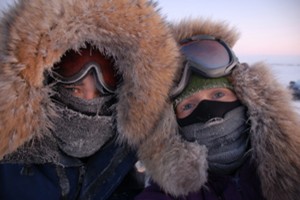
In a country that spans 7,500km it’s not always easy to make sure everybody gets a good education. Imagine what it’s like in a rural community like Igloolik, Nunavut, which is between mainland Canada and Baffin Island, on the 69th parallel?
Although Igloolik means ‘Place of Houses’ in Inuit, less than 2000 people live there and housing for those people is in very short supply. Getting even simple grocery, let alone books and teaching resources is a challenge. And, probably most importantly, qualified teachers are in very short supply.
Two of the people who do live in Igloolik are UBC Faculty of Education graduates Dean Morrow and his wife Leah. Both completed the West Kootenays Teacher Education Program (WKTEP) in 2008. That program is jointly run by the University of British Columbia and Selkirk College and is specifically designed to help train teachers who want to live and work in rural communities.
Morrow and his wife are self-confessed world travelers and thought seriously about taking their newly-minted UBC teaching degrees overseas after they graduated in 2008. However, after posting their resumes to the Education Canada web site they were quickly contacted by the Principal of Ataguttaaluk Elementary School in Igloolik. A number of conversations and some soul searching later and the two decided there were just too many benefits to pass up on moving to Igloolik.
“Being world travelers we had put some thought into looking overseas [for jobs], but the appeal of a completely different culture, landscape, and lifestyle in our own country proved to be more powerful,” says Morrow. “Starting a teaching career in the remote north also offers a huge financial benefit because of higher salaries and remote living allowances and tax benefits.”
But even with their experience traveling across continents, the Morrow’s were in for a few surprises in Canada’s Great White North. Imagine finding out that you actually liked the taste of raw seal liver and whale blubber, for example? Or seeing the massive skin of a freshly slain polar bear hanging in your neighbour’s back yard? Perhaps more seriously, imagine the very real sense of almost complete isolation.
“The reality of not having a road connect you to anywhere else was a bit of an isolating feeling for sure,” says Morrow. “I mean, we knew we in were on an island, and we knew they were no neighbouring communities close-by, but you don’t really appreciate your true isolation until arrive here and think about the physical distance between you and the nearest southern city.”
Despite that isolation, Morrow says, there are some things that don’t change no matter where you go.
“Kids in small towns are just the same as kids in big cities,” says Morrow. “They’re kids. A difference being in a big city is you don’t feel like a superhero when you walk into a grocery store. In Igloolik, outside of school you can’t walk anywhere without seeing the children you teach. They generally love their teachers, and often ask to come over and hang out, which we don’t allow. Even walking down the streets, you’ll hear your name being bellowed from 200m away, or from the inside of a house.”
UBC’s Faculty of Education continues to develop programs and support research that will help isolated rural communities like Igloolik. In fact, with the recent $2-million donation of Dr. Don Rix to support rural teacher education specifically, that commitment has never been stronger.
“This generous gift will help UBC provide leadership in rural teacher education and begin to address issues of educational access and opportunity for rural communities through B.C.,” says Rob Tierney, dean of the Faculty of Education. “The blueprints for rural teacher education that are developed here will be used in communities worldwide.”
And that means more superheroes like the Morrow’s for places like Igloolik.
For Faculty
This page is for faculty.
For Staff
This page is for staff.